Key Takeaways
- AI content needs significant human refinement to rank well on Google.
- Focus on E-E-A-T (Experience, Expertise, Authoritativeness, Trustworthiness) to satisfy Google's quality guidelines.
- Conduct thorough keyword research, even for AI-generated outlines, to target relevant search terms.
- Structure AI content logically with clear headings, subheadings, and internal links for readability and SEO.
- Use tools like Humanizer to refine AI text, making it sound natural and helping to escape AI detection.
- Integrate unique perspectives, real-world examples, and a distinct brand voice to differentiate your content.
- Regularly update and promote your AI-assisted content to maintain relevance and boost rankings.

Rank AI Blog Posts on Google: The Humanizer's Guide
In the rapidly evolving landscape of digital content, artificial intelligence has emerged as a powerful tool for generating blog posts at scale. From brainstorming ideas to drafting full articles, AI can significantly streamline the content creation process. However, the true challenge lies not just in creating AI-generated content, but in ensuring it ranks high on Google and genuinely connects with human readers. Google's algorithms are increasingly sophisticated, prioritizing high-quality, authoritative, and human-centric content. This means that simply churning out AI text won't guarantee visibility or engagement.
This comprehensive guide from Humanizer will equip you with the strategies and insights needed to optimize your AI-generated blog posts for search engines while ensuring they sound natural, engaging, and indistinguishable from human-written content. We'll delve into the nuances of combining AI efficiency with human quality, making your content a powerhouse for both SEO and reader satisfaction.
Key takeaways
- AI content needs significant human refinement to rank well on Google.
- Focus on E-E-A-T (Experience, Expertise, Authoritativeness, Trustworthiness) to satisfy Google's quality guidelines.
- Conduct thorough keyword research, even for AI-generated outlines, to target relevant search terms.
- Structure AI content logically with clear headings, subheadings, and internal links for readability and SEO.
- Use tools like Humanizer to refine AI text, making it sound natural and helping to escape AI detection.
- Integrate unique perspectives, real-world examples, and a distinct brand voice to differentiate your content.
- Regularly update and promote your AI-assisted content to maintain relevance and boost rankings.
The AI Content Revolution and Google's Stance
The rise of AI writing tools has democratized content creation, allowing individuals and businesses to produce vast amounts of text quickly and affordably. While this presents immense opportunities, it also poses new challenges regarding content quality and authenticity. Google has been vocal about its stance on AI-generated content, emphasizing that its primary goal is to reward helpful, reliable, and people-first content, regardless of how it's produced.
This means that simply using AI to generate text is not inherently bad for SEO. What matters is the quality and utility of the final output. If AI content is poorly written, repetitive, factually inaccurate, or lacks unique insights, it will struggle to rank. Conversely, if AI is used as a tool to assist in creating high-quality, valuable content that meets user needs, it can perform exceptionally well.
Understanding Google's Quality Guidelines: E-E-A-T
Google's Search Quality Rater Guidelines heavily emphasize E-E-A-T: Experience, Expertise, Authoritativeness, and Trustworthiness. These principles are crucial for any content aiming to rank, and AI-generated content is no exception.
- Experience: Does the content demonstrate firsthand experience with the topic? While AI can't have experiences, human editors can infuse content with personal anecdotes, case studies, or practical advice.
- Expertise: Is the content created by someone with deep knowledge of the subject? This often requires human oversight, fact-checking, and the addition of nuanced insights that only an expert would possess.
- Authoritativeness: Is the content and its creator recognized as a go-to source for the topic? Building authority involves consistent high-quality output, backlinks from reputable sites, and a strong online presence.
- Trustworthiness: Is the content accurate, transparent, and reliable? This is paramount, especially for "Your Money or Your Life" (YMYL) topics. Human verification and citation of credible sources are essential.
For AI-generated content to succeed, it must be meticulously reviewed and enhanced by human editors to align with these E-E-A-T principles. This is where tools like Humanizer become invaluable, helping to refine AI output into content that exudes these qualities.
Phase 1: Strategic Planning for AI Content
Before you even prompt your AI, strategic planning is key. Treating AI as a mere text generator without a solid plan will lead to generic, unranked content. Think of AI as a powerful assistant, not a replacement for strategic thinking.
Niche and Audience Identification
Even with AI, understanding your target audience and niche is paramount. What questions do they have? What problems do they need solved? What language resonates with them? AI can help generate content, but only a human can truly empathize with the audience and tailor the content accordingly.
- Define your reader persona: Age, interests, pain points, preferred content formats.
- Analyze competitor content: What are they doing well? Where are their gaps?
- Identify unique angles: How can your AI-assisted content offer a fresh perspective?
Comprehensive Keyword Research
Keyword research remains the bedrock of SEO. Even if AI generates your blog post, the underlying keywords need to be carefully chosen to ensure your content is discoverable. Start with broad topics and drill down into long-tail keywords that indicate specific user intent.
- Use keyword research tools: Ahrefs, Semrush, Google Keyword Planner are essential.
- Focus on user intent: Are people looking for information, commercial products, navigation, or transactions? Tailor your content to match.
- Identify semantic keywords: These are related terms and phrases that help Google understand the broader context of your content. AI can sometimes include these naturally, but human review is crucial.
- Incorporate question-based keywords: These are excellent for generating "People Also Ask" snippets and directly addressing user queries.
Content Outlining and Structure
A well-structured outline provides a roadmap for your AI, ensuring the generated content is logical, comprehensive, and easy to follow. This is where you inject your human strategy into the AI's generation process.
- Create a detailed outline: Include main headings (H2), subheadings (H3), and key points for each section.
- Integrate keywords naturally: Place your primary and secondary keywords within the outline's headings and subheadings.
- Plan for internal and external links: Identify opportunities to link to other relevant articles on your site (like our guide on AI to Human Text Converter: Make Your Content Undetectable) and authoritative external sources.
- Consider content format: Will it be a listicle, a how-to guide, a comparison, or an in-depth analysis? Structure the outline accordingly.
Phase 2: AI Content Generation and Human Refinement
Once your strategic plan is in place, it's time to leverage AI for drafting. However, the work doesn't stop once the AI delivers its output. This phase is about transforming raw AI text into polished, SEO-friendly, and human-sounding content.
Effective AI Prompting
The quality of AI output heavily depends on the quality of your prompts. Be specific, provide context, and guide the AI towards the desired tone and style.
- Provide detailed instructions: Include the target audience, desired tone (e.g., informative, conversational, authoritative), key points from your outline, and keywords to incorporate.
- Specify word count and structure: Ask the AI to write a certain number of words per section and follow your H2/H3 structure.
- Request specific examples or data points: If you have particular statistics or anecdotes in mind, prompt the AI to integrate them.
- Iterate and refine: Don't settle for the first draft. Prompt the AI to expand, clarify, or rewrite sections as needed.
Human Editing and Enhancement: The Humanizer's Role
This is arguably the most critical step. Raw AI output often lacks originality, depth, and the natural flow of human language. It can also contain repetitive phrases, factual errors, or generic statements that Google's algorithms are designed to de-prioritize.
- Fact-checking and accuracy: Always verify any data, statistics, or claims made by the AI. This is non-negotiable, especially for YMYL topics.
- Injecting E-E-A-T: Add personal anecdotes, expert opinions, unique insights, and real-world examples that demonstrate experience and expertise.
- Refining language and tone: AI can sometimes sound robotic or overly formal. Humanize the text by adding colloquialisms (where appropriate), varying sentence structure, and ensuring a natural, engaging flow. This is where a tool like Humanizer shines. It helps to convert AI text to human, making it sound more natural and less detectable as AI-generated.
- Improving readability: Break up long paragraphs, use transition words, and ensure a logical progression of ideas.
- Adding unique value: What can you add that an AI couldn't? A unique perspective, a strong opinion, a case study from your own experience? This is what differentiates your content.
- Optimizing for SEO beyond keywords: While keywords are important, also consider semantic SEO, topic clusters, and user experience signals.
Using Humanizer to Refine AI Text
Humanizer is specifically designed to bridge the gap between AI efficiency and human quality. It takes your AI-generated text and transforms it, making it sound more natural, engaging, and indistinguishable from human writing. This not only improves the reader experience but also helps your content perform better against Google's evolving algorithms, which increasingly look for signs of human authorship and originality.
By running your AI drafts through Humanizer, you can:
- Improve flow and coherence: Eliminate awkward phrasing and ensure smooth transitions between sentences and paragraphs.
- Enhance vocabulary and style: Replace repetitive words with synonyms and adjust the overall writing style to be more dynamic and engaging.
- Remove robotic undertones: Humanizer helps eliminate the subtle markers that can betray AI authorship, making your content sound genuinely human.
- Boost authenticity: The tool helps infuse a natural voice and rhythm, crucial for building trust and connection with your audience.
For more insights on selecting the right tools, you might find our article on the Best AI Humanizer: Top 3 Tools To Humanize AI Text particularly helpful.
Phase 3: On-Page SEO and Technical Optimization
Even the most humanized AI content needs proper on-page and technical SEO to rank effectively. This phase ensures Google can find, understand, and index your content.
On-Page SEO Best Practices
- Title Tags and Meta Descriptions: Craft compelling, keyword-rich title tags (under 60 characters) and meta descriptions (under 160 characters) that entice users to click.
- URL Structure: Create short, descriptive, and keyword-rich URLs.
- Header Tags (H1, H2, H3, etc.): Use these to structure your content logically. Your H1 should contain your primary keyword. H2s and H3s should break down the content into digestible sections, often incorporating secondary keywords.
- Keyword Placement: Naturally integrate your primary and secondary keywords throughout the content, especially in the introduction, body paragraphs, and conclusion. Avoid keyword stuffing.
- Image Optimization: If you include images (though not in this example), ensure they have descriptive alt text and are compressed for fast loading.
- Internal Linking: Link to other relevant articles on your site to improve site navigation, distribute link equity, and keep users engaged.
- External Linking: Link out to authoritative, credible sources to support your claims and demonstrate trustworthiness.
- Readability: Use short sentences, clear paragraphs, bullet points, and white space to make content easy to read and scan.
Technical SEO Considerations
- Mobile Responsiveness: Ensure your website and content display perfectly on all devices. Google is mobile-first indexing.
- Page Speed: Optimize images, leverage browser caching, and use a reliable hosting provider to ensure your pages load quickly.
- Schema Markup: Implement schema markup (e.g., Article schema, FAQ schema) to help search engines better understand your content and potentially display rich snippets in search results.
- XML Sitemap: Ensure your sitemap is up-to-date and submitted to Google Search Console.
- Robots.txt: Verify that your robots.txt file isn't blocking important pages from being crawled.
Phase 4: Promotion, Monitoring, and Iteration
Publishing your AI-assisted, human-refined blog post is just the beginning. Ongoing promotion, monitoring, and iteration are crucial for long-term ranking success.
Content Promotion Strategies
- Social Media: Share your blog posts across relevant social media platforms. Craft engaging snippets and questions to encourage clicks and shares.
- Email Marketing: Include your latest blog posts in your newsletters to your subscribers.
- Community Engagement: Share your content in relevant online forums, groups, and Q&A sites (e.g., Reddit, Quora), where appropriate and non-spammy.
- Outreach: If your content is truly exceptional, consider reaching out to industry influencers or websites for potential backlinks or mentions.
Monitoring Performance
Regularly track the performance of your AI-generated blog posts using analytics tools.
- Google Analytics: Monitor traffic, bounce rate, time on page, and conversion rates.
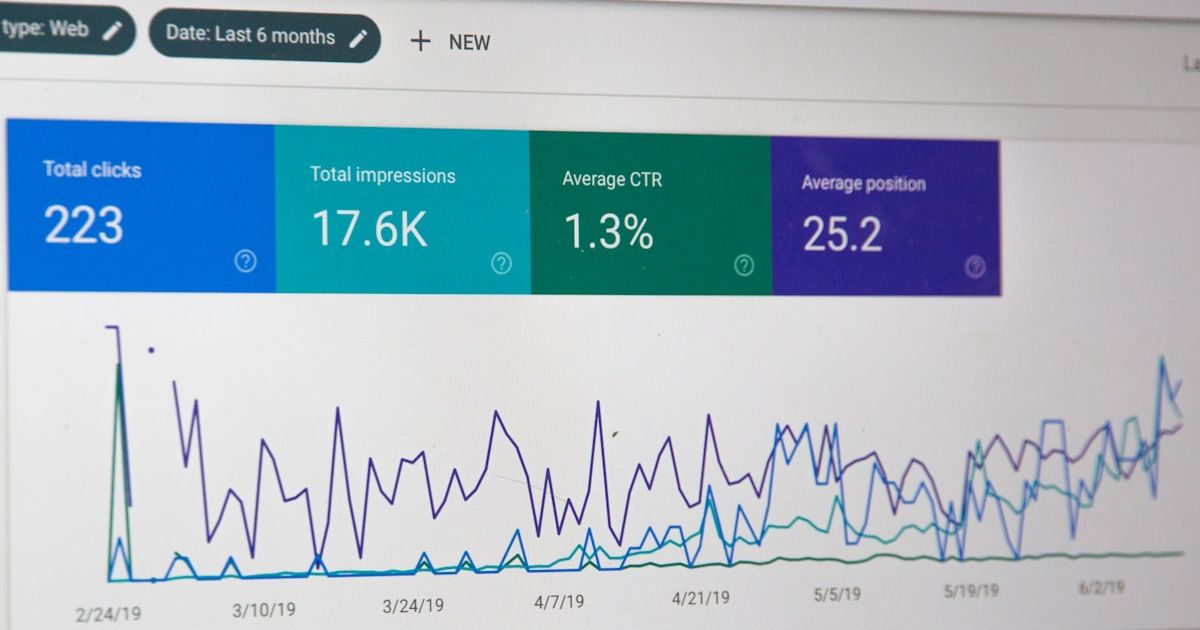
- Google Search Console: Track keyword rankings, impressions, clicks, and identify any indexing issues.
- Backlink Trackers: Keep an eye on new backlinks acquired and their quality.
Iterative Improvement
SEO is not a one-time task; it's an ongoing process. Use your performance data to continually refine and improve your content.
- Update and Refresh: Periodically review old blog posts. Update outdated information, add new insights, improve readability, and refresh keywords. This signals to Google that your content is still relevant.
- Expand Content: If a post is performing well, consider expanding it into a more comprehensive guide or creating related content to form a topic cluster.
- Address Gaps: Use user feedback and search console data to identify content gaps and create new AI-assisted articles to fill them.
Conclusion
Ranking AI-generated blog posts on Google is entirely achievable, but it requires a strategic, human-centric approach. AI is a powerful tool for efficiency, but it cannot replace the critical thinking, empathy, and creativity that human editors bring to the table. By meticulously planning your content, effectively prompting AI, and most importantly, applying thorough human refinement—especially with the aid of tools like Humanizer to make your text sound natural and authentic—you can create content that not only satisfies Google's algorithms but also genuinely resonates with your audience. Embrace the synergy of AI and human intelligence, and watch your blog posts climb the search rankings.